What Causes a Furnace to Stop Working Suddenly?
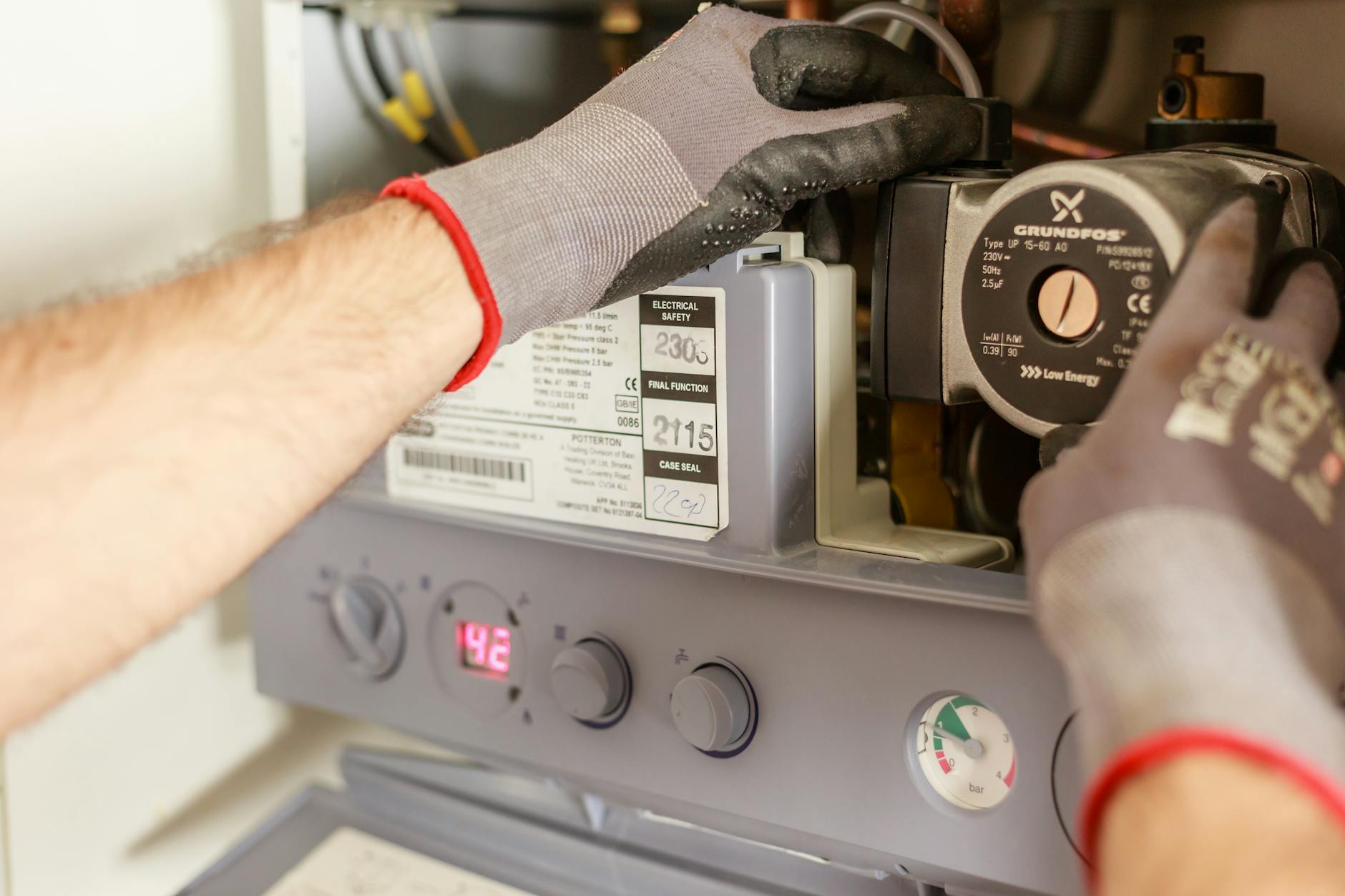
A furnace that stops working suddenly almost always fails for one of eight reasons: a tripped safety switch, a clogged or wet air filter, a failed ignitor or flame sensor, a blower motor that has seized, a cracked heat exchanger, a dead thermostat, a gas or oil supply interruption, or a control board fault. Most of these announce themselves the same way - the thermostat calls for heat, the house goes cold, and nothing happens at the unit.
Sudden furnace failure is not random. Something tripped, clogged, burned out, or shut itself down on purpose. Below we walk through each cause, what it looks like from your side of the thermostat, and how to tell a five-minute fix from a job that needs a technician. We do this work across the United States every heating season, so the list is ordered by how often we actually find each one.
The Short Answer: Why Furnaces Quit Without Warning
Furnaces quit without warning because modern units are built to shut themselves down the moment a safety sensor reads something wrong. The shutdown is the symptom, not the failure. A dirty flame sensor, a blocked flue, or a blower drawing too many amps all trigger the same protective lockout, and from the hallway it looks identical.
Furnace repair is the trade of finding out which safety tripped and why, then correcting the underlying condition so it does not trip again. That distinction matters. Replacing a flame sensor without cleaning the burn chamber that fouled it buys you three weeks, not three years.
Older units behave differently. A 25-year-old furnace with a standing pilot and a cast-iron heat exchanger often fails mechanically rather than electronically - a belt snaps, a bearing seizes, a thermocouple dies. Newer high-efficiency condensing furnaces fail electronically far more often, and they fail in ways that produce no noise and no obvious clue at the cabinet.
The 8 Most Common Causes of Sudden Furnace Failure
1. A Tripped Safety Switch or Limit Switch
The high-limit switch cuts power to the burners when the furnace gets hotter than it should - usually above 160 to 180 degrees Fahrenheit at the plenum. It trips for a reason: restricted airflow, a dirty filter, closed registers, or a blower that is running slower than it should. Reset it without fixing the airflow and it will trip again within a day.
2. A Clogged, Wet, or Wrong-Size Air Filter
A filter that has not been changed in three months can cut airflow by 40 percent or more. In a 1-inch filter slot, that happens fast. A wet filter - common after a humidifier leak or a condensate overflow - is worse, because it collapses and blocks the return entirely. Change 1-inch filters every 30 to 60 days during heating season.
3. A Failed Ignitor or Flame Sensor
Hot-surface ignitors are ceramic and fragile. They crack from thermal cycling, and a cracked ignitor draws the wrong amperage and never lights the gas. The flame sensor is the opposite problem: it works fine until a microscopic layer of carbon builds up on the rod, at which point the furnace lights, runs for five seconds, and shuts off. That light-then-die pattern is the classic flame sensor signature.
4. A Seized or Failing Blower Motor
When the blower will not spin, the burners light and the limit switch trips within two to three minutes. You get heat for a moment, then nothing. A failing blower motor often hums before it dies, and the hum gets louder over a week or two. This is one of the repairs we handle most often, and it is rarely something a homeowner can safely tackle.
5. A Cracked Heat Exchanger
A cracked heat exchanger is the one failure you should never ignore. It lets carbon monoxide mix with the air your family breathes. Signs include a yellow or orange burner flame instead of blue, soot streaks near the burners, and a furnace that shuts down repeatedly on the limit. If you suspect this, stop using the furnace and call for service the same day.
6. A Thermostat That Has Lost Its Mind
Dead batteries, a tripped breaker at the air handler, a loose C-wire, or a thermostat that has drifted out of calibration will all produce a no-heat call. Before you assume the furnace is broken, check that the thermostat is set to HEAT, the setpoint is at least 3 degrees above room temperature, and the display is on. It sounds obvious. It is also the single most common false alarm we run.
7. A Gas or Oil Supply Interruption
Gas furnaces stop when the utility shuts the meter off, when a neighbor's line work interrupts service, or when the shutoff valve near the furnace gets bumped closed. Oil furnaces stop when the tank runs dry, the filter clogs, or the nozzle plugs. If you have oil, check the tank gauge first - a dry tank also means you need the line bled before the burner will fire.
8. A Failed Control Board
The control board is the furnace's brain. When it fails, nothing happens at all: no inducer, no ignitor, no blower. Boards fail from power surges, moisture, insect nests, and age. A board replacement runs $400 to $900 installed in 2026 depending on the model, and on a furnace over 18 years old it is worth pricing against replacement before you commit.
Why Does My Furnace Stop Working in Cold Weather?
Furnaces fail most often on the coldest nights of the year because that is when they run the longest and work the hardest. A unit that cycles 10 times a day in October cycles 30 times a day in January. Every weak component - a marginal ignitor, a blower bearing, a tired capacitor - gets pushed past its limit.
Two cold-weather failures are specific to high-efficiency condensing furnaces. The first is a frozen condensate line. The furnace produces water as it condenses flue gas, and that water drains through a PVC line that can freeze solid when the outdoor run is not sloped or insulated properly. When the line freezes, the pressure switch reads a fault and the furnace locks out. The second is a blocked intake or exhaust pipe, which happens when snow drifts cover the termination or frost builds inside the pipe.
If your furnace quits on the first hard freeze of the season, check the outdoor PVC pipes before you do anything else. Clear the snow, look for ice at the termination, and if the pipe runs through an unheated space, that is your likely culprit.
What to Check Before You Call Anyone
Run through this list before you pick up the phone. It takes five minutes and it resolves a surprising share of no-heat calls.
- Thermostat: set to HEAT, setpoint 3 degrees above room temp, fresh batteries, display on.
- Filter: pull it and look through it. If you cannot see light through it, replace it.
- Breaker: check both the furnace breaker and the switch on the side of the unit. Some furnaces have a light switch that looks like a light switch and gets flipped by accident.
- Gas valve: confirm the shutoff near the furnace is parallel to the pipe, not perpendicular.
- Oil tank: if you heat with oil, check the gauge.
- Outdoor pipes: for high-efficiency units, clear snow and ice from the intake and exhaust.
- Error code: open the blower door and look for a blinking LED. Count the flashes - that code tells a technician exactly where to start.
If all seven check out and the house is still cold, the problem is inside the unit. That is when it is time to bring in someone who works on furnaces every day.
Common Mistakes Homeowners Make After a Furnace Quits
The first mistake is resetting the furnace over and over. Every reset attempt pushes unburned gas into the heat exchanger and the flue. If the furnace has locked out three times, stop. The lockout is doing its job.
The second mistake is taping over a cracked heat exchanger or ignoring a yellow flame. A yellow flame means incomplete combustion, and incomplete combustion means carbon monoxide. This is not a wait-and-see problem.
The third mistake is replacing parts by guess. We regularly arrive at homes where a homeowner has already installed a new thermostat, a new ignitor, and a new filter, and the actual fault was a $12 flame sensor that needed cleaning. Guessing costs more than diagnosing.
The fourth mistake is running a furnace with the blower door off. That door is part of the combustion air path on many models. Leaving it off changes the pressure inside the cabinet and can cause the burners to run rich or the limit to trip.
The fifth mistake is waiting until the house is 50 degrees inside. A no-heat call at 2 a.m. in January is an emergency. The same call at 2 p.m. in October is a scheduled repair. Same problem, very different cost and stress level.
When to Call a Professional
Call a professional the moment you smell gas, see a yellow burner flame, hear repeated clicking without ignition, or find soot around the burners. Those four signs point to combustion problems, and combustion problems are not homeowner territory.
Call us for anything electrical inside the cabinet, too. Control boards, ignitors, blower motors, and inducer assemblies all involve line voltage and gas piping in the same small space. Our technicians carry the meters, the manometer, and the combustion analyzer to diagnose the actual fault instead of swapping parts until something works.
If your furnace is over 15 years old and has needed two or more repairs in the last three seasons, ask us to price a replacement alongside the repair. Sometimes the honest answer is that the repair is throwing money at a unit that is already past its service life, and we will tell you that straight.
Frequently Asked Questions
Why did my furnace stop working suddenly when it was fine yesterday?
Most sudden failures are the last straw on a part that was already worn - a flame sensor that finally fouled, a blower bearing that finally seized, a limit switch that finally tripped on restricted airflow. The furnace did not fail overnight. It failed on the night the worn part could no longer keep up.
How much does furnace repair cost in 2026?
Typical 2026 repair pricing runs $150 to $400 for common fixes like ignitors, flame sensors, and thermostats, and $400 to $900 for blower motors, inducers, and control boards. Emergency after-hours calls add $100 to $250. A diagnostic visit usually runs $79 to $150 and is often credited toward the repair.
Can I reset my furnace myself?
You can, once. Turn the thermostat off, cut power at the switch for 30 seconds, restore power, and call for heat. If the furnace locks out again, stop resetting it. Repeated resets push unburned gas into the heat exchanger and can turn a $200 repair into a $2,000 problem.
How long should a furnace last before it needs replacing?
A well-maintained gas furnace lasts 15 to 20 years. Oil furnaces often reach 20 to 25. Past year 15, expect one repair every season or two. Once you are paying for two repairs a year on a unit that old, replacement usually costs less over the next five years than continuing to patch it.
Why does my furnace run for a few minutes and then shut off?
Short cycling almost always means the high-limit switch is tripping on heat buildup. The usual causes are a clogged filter, closed supply registers, a weak blower motor, or a dirty evaporator coil. Each one restricts airflow, and restricted airflow is what the limit switch is designed to catch.
Get Help with Furnace Repair in the United States
If your furnace quit and you have run through the checklist without luck, we can be at your door with the parts and the diagnostic tools to fix it right the first time. We handle gas, oil, electric, and mobile home systems, and we quote the repair before we start.
Call Furnace Rescue Pros at (855) 797-0010 and we will get your heat back on.
Frequently asked questions
Why did my furnace stop working suddenly when it was fine yesterday?
Most sudden failures are the last straw on a part that was already worn - a flame sensor that finally fouled, a blower bearing that finally seized, a limit switch that finally tripped on restricted airflow. The furnace did not fail overnight. It failed on the night the worn part could no longer keep up.
How much does furnace repair cost in 2026?
Typical 2026 repair pricing runs $150 to $400 for common fixes like ignitors, flame sensors, and thermostats, and $400 to $900 for blower motors, inducers, and control boards. Emergency after-hours calls add $100 to $250. A diagnostic visit usually runs $79 to $150 and is often credited toward the repair.
Can I reset my furnace myself?
You can, once. Turn the thermostat off, cut power at the switch for 30 seconds, restore power, and call for heat. If the furnace locks out again, stop resetting it. Repeated resets push unburned gas into the heat exchanger and can turn a $200 repair into a $2,000 problem.
How long should a furnace last before it needs replacing?
A well-maintained gas furnace lasts 15 to 20 years. Oil furnaces often reach 20 to 25. Past year 15, expect one repair every season or two. Once you are paying for two repairs a year on a unit that old, replacement usually costs less over the next five years than continuing to patch it.
Why does my furnace run for a few minutes and then shut off?
Short cycling almost always means the high-limit switch is tripping on heat buildup. The usual causes are a clogged filter, closed supply registers, a weak blower motor, or a dirty evaporator coil. Each one restricts airflow, and restricted airflow is what the limit switch is designed to catch.