What Causes a Furnace Blower Motor to Stop Working?
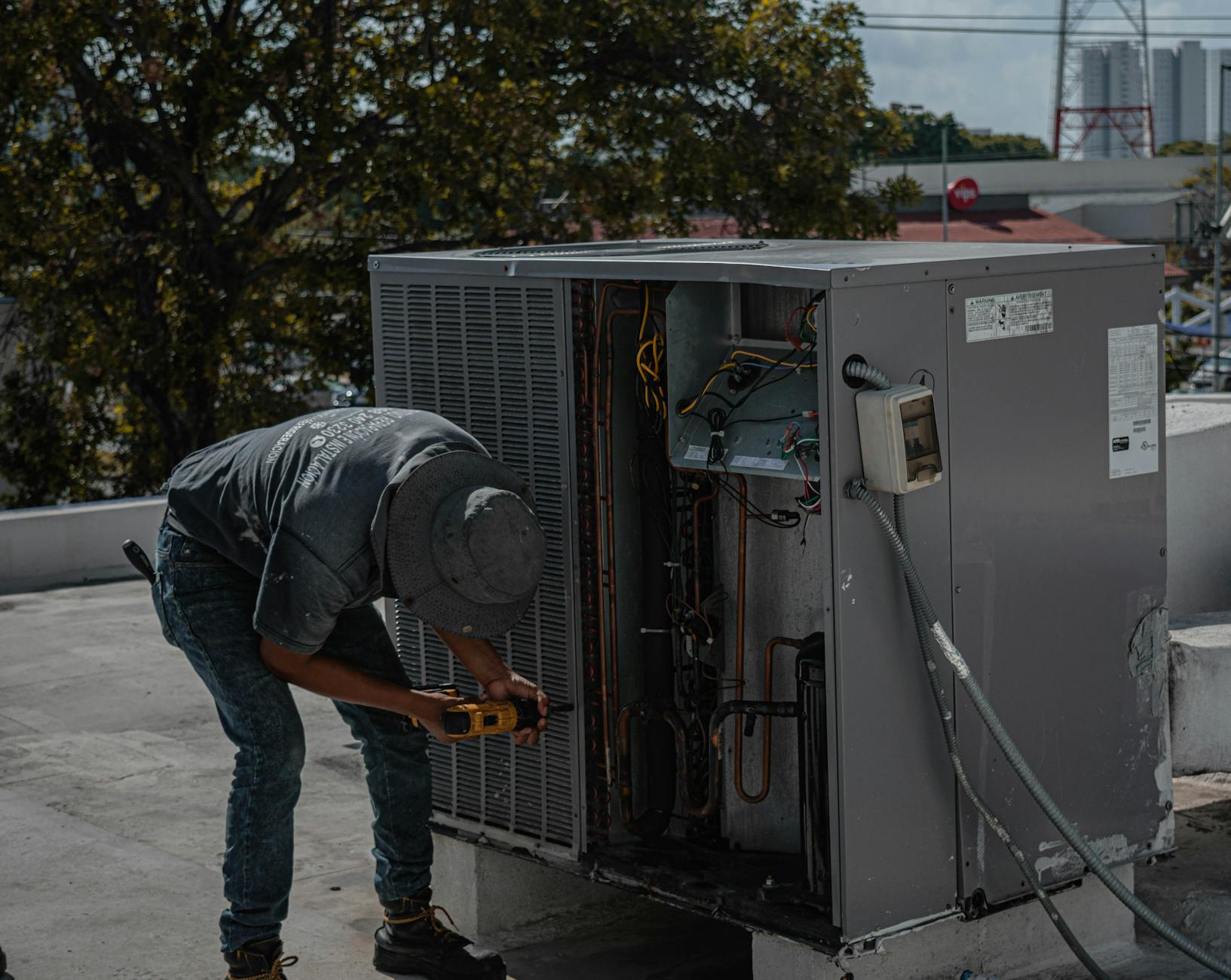
A furnace blower motor stops working most often because of a failed run capacitor, a clogged air filter that overheats the motor, or worn bearings that seize the shaft. Those three account for the majority of no-airflow calls we run between October and March. The motor itself is usually the victim, not the culprit - something upstream cooked it, starved it, or overloaded it. Below we walk through every realistic cause, what each one sounds and smells like, what a repair costs in 2026, and the point where you should stop troubleshooting and call us.
The Short Answer: Why Blower Motors Fail
Furnace blower motor failure is a mechanical or electrical breakdown that stops the fan from pushing heated air through your ductwork. The motor spins a squirrel-cage wheel inside the blower housing; when the capacitor weakens, the bearings dry out, or the windings overheat, that wheel stops turning and your vents go cold even though the burners are still firing.
Three failure modes cover roughly 80% of what we see in the field:
- Capacitor failure - the motor hums but won't start, or starts slowly and runs hot.
- Restricted airflow - a filter you haven't changed in six months traps heat inside the motor housing until the thermal overload trips.
- Bearing wear - the shaft grinds, squeals, and eventually locks up. This one is age-driven; most blower motors last 10 to 15 years.
If your blower quit today, the fastest path back to heat is furnace blower motor repair - we stock the common 1/3 HP and 1/2 HP motors and most run capacitors on the truck, so a same-day fix is realistic in most cases.
How the Blower Motor Fits Into Your Furnace
The blower motor is the only part of your furnace that moves air. The burners make heat, the heat exchanger transfers it, but nothing reaches your rooms until the blower pushes it through the supply plenum and down the ducts. That's why a blower failure feels total - the furnace may run, the thermostat may call for heat, and you still get nothing at the registers.
On a typical residential furnace you'll find one of three motor types: a PSC motor (permanent split capacitor, the workhorse in units built before about 2010), a constant-torque ECM, or a fully variable-speed ECM. PSC motors are cheap to replace and easy to diagnose. ECM motors are efficient and quiet but cost three to four times more when they fail - $400 to $900 for the motor alone in 2026, versus $150 to $400 for a PSC.
Knowing which one you have matters before you authorize any repair. A technician who quotes you an ECM price on a PSC system is either misreading the nameplate or upselling. We check the model and serial first, every time.
The 7 Most Common Causes of Blower Motor Failure
1. A Failed Run Capacitor
The run capacitor gives the motor the electrical push it needs to start spinning. When it weakens - and they all weaken with age - the motor draws higher amperage, runs hotter, and eventually trips its internal thermal overload. You'll hear a hum from the blower compartment with no airflow. A replacement capacitor runs $15 to $40 in parts and about $150 to $280 installed in 2026. This is the single cheapest blower fix and the one most often missed by homeowners who assume the motor is dead.
2. A Clogged or Wrong-Size Air Filter
A 1-inch fiberglass filter that hasn't been changed in three months can restrict airflow by 40% or more. The blower keeps spinning against that resistance, the motor housing overheats, and the thermal protector shuts it down. It cools, restarts, overheats again - a cycle that shortens motor life every time it repeats. Change 1-inch filters every 30 to 60 days during heating season. If you run a high-MERV filter (MERV 11 or higher), check it monthly; those load up fast.
3. Worn Bearings and a Dry Shaft
Most blower motors have sealed bearings, but the seals fail with age and heat. Once grease escapes, the shaft starts to drag. You'll hear a squeal or a low rumble that gets worse over weeks. Left alone, the shaft seizes and the motor burns out - turning a $200 bearing-and-lube job into a full motor replacement. If you catch the squeal early, we can often save the motor.
4. Overheating From a Dirty Blower Wheel
The squirrel-cage wheel collects dust, pet hair, and dryer lint until the fins are packed solid. A loaded wheel is heavier, unbalanced, and moves less air - the worst combination for motor longevity. We pull the blower assembly, wash the wheel, and rebalance it during a proper furnace maintenance & tune-up. That single step adds years to motor life in homes with pets.
5. Electrical Problems: Relays, Boards, and Wiring
Sometimes the motor is fine and the signal never reaches it. A pitted blower relay on the control board, a loose wire nut at the motor plug, or a failed limit switch will all produce the same symptom: no blower. We meter the board output before condemning any motor. On furnaces older than 15 years, a failing control board is a common culprit and runs $300 to $700 installed.
6. A Tripped Thermal Overload
Most blower motors have a built-in thermal protector that opens the circuit when the windings hit roughly 220°F to 250°F. It resets automatically once the motor cools. If your blower runs for 10 minutes, quits, then comes back 20 minutes later, that's the overload doing its job - and it means one of the causes above is still unresolved. Don't ignore a cycling blower; it's a warning, not a quirk.
7. Age and End-of-Life Failure
Blower motors have a service life of 10 to 15 years in normal residential use. If yours is original to a furnace installed in the mid-2000s or earlier, you're on borrowed time. When a motor that old fails, we quote both the motor replacement and a full furnace replacement so you can compare the math - a $600 motor on a 20-year-old furnace is often money you'd rather put toward a new unit.
What Does a Bad Blower Motor Sound and Act Like?
Blower motors telegraph their failure before they quit. The sounds and behaviors below are the ones we ask homeowners to listen for:
- Humming with no airflow - capacitor or seized shaft.
- High-pitched squeal - dry bearings.
- Rumbling or grinding - worn bearings or a loose wheel.
- Clicking on and off every few minutes - thermal overload cycling.
- Burning smell near the blower door - overheated windings. Shut the furnace off at the breaker and call us.
- Weak airflow at every register - dirty wheel or failing motor under load.
One more tell: if the furnace ignites, runs for 60 to 90 seconds, then shuts down before the blower ever starts, you likely have a blower problem, not an ignition problem. Homeowners misdiagnose this constantly and end up replacing parts that were never broken.
What to Watch Out For: Mistakes That Kill Blower Motors
The most expensive blower motor mistake is replacing the motor without fixing what killed it. We've seen motors fail twice in one season because nobody addressed the underlying cause.
- Running the system with a clogged filter. This is the number one killer. A $12 filter protects a $600 motor.
- Installing an oversized motor. Bigger isn't better - an oversized motor moves too much air, raises static pressure, and stresses the heat exchanger.
- Skipping the capacitor when replacing the motor. A new motor on an old, weak capacitor will fail early. Always replace both.
- Ignoring a cycling blower. If it's shutting off and coming back, something is wrong. It won't fix itself.
- Running the fan in "ON" mode 24/7 with a dirty filter. Continuous operation with restricted airflow is the fastest way to cook a motor.
If your system is older and you're weighing repair against replacement, a professional furnace inspection & servicing will tell you which side of that line you're on. We check static pressure, amp draw, and heat exchanger condition - the three numbers that actually predict remaining life.
When to Call a Professional
Call a technician if you smell burning near the furnace, if the blower hums but won't spin, if the motor cycles on and off, or if you've replaced the filter and airflow is still weak. Those are all signs of an electrical or mechanical failure that needs a meter and a trained eye - not a homeowner with a screwdriver.
We handle blower diagnostics and repair across the country, and we quote the price before we start. If your furnace is down and you need heat tonight, our emergency furnace repair team runs seven days a week. For gas systems specifically, we also handle gas furnace repair - including the safety checks that matter when a blower fails mid-cycle and the heat exchanger has been running hot.
Frequently Asked Questions
How much does it cost to replace a furnace blower motor in 2026?
Expect $400 to $900 for a PSC motor installed, and $700 to $1,400 for an ECM motor. The motor itself is $150 to $400 (PSC) or $400 to $900 (ECM); labor runs $200 to $500 depending on access. Capacitor-only repairs are far cheaper at $150 to $280.
Can I run my furnace if the blower motor is bad?
No. Running the furnace with a dead blower lets the heat exchanger overheat, which can crack it and introduce carbon monoxide into your home. Shut the furnace off at the thermostat and the breaker until a technician diagnoses it.
How long does a furnace blower motor last?
Most blower motors last 10 to 15 years. Motors in homes with pets, heavy dust, or chronically dirty filters often fail closer to 8 years. Annual tune-ups and 30-to-60-day filter changes are the two things that push a motor toward the long end of that range.
Why does my blower run constantly and never shut off?
A blower that never shuts off usually points to a stuck fan relay on the control board, a thermostat set to "ON" instead of "AUTO," or a limit switch that's tripped and won't reset. Check the thermostat setting first - it's the free fix. If it's already on AUTO, the board or limit switch needs testing.
Is a blower motor repair worth it on an old furnace?
If your furnace is under 12 years old and otherwise healthy, yes - a $400 to $900 motor repair beats a $4,000 to $7,000 replacement. Past 15 years, or if the heat exchanger shows cracks, put the money toward a new furnace instead.
Get Help With Furnace Repair in the United States
If your blower has quit and the house is getting cold, don't wait it out. We diagnose the real cause, quote the repair upfront, and get your heat back on - often the same day. Call Furnace Rescue Pros at (855) 797-0010 and we'll get a technician headed your way.
Frequently asked questions
How much does it cost to replace a furnace blower motor in 2026?
Expect $400 to $900 for a PSC motor installed, and $700 to $1,400 for an ECM motor. The motor itself is $150 to $400 (PSC) or $400 to $900 (ECM); labor runs $200 to $500 depending on access. Capacitor-only repairs are far cheaper at $150 to $280.
Can I run my furnace if the blower motor is bad?
No. Running the furnace with a dead blower lets the heat exchanger overheat, which can crack it and introduce carbon monoxide into your home. Shut the furnace off at the thermostat and the breaker until a technician diagnoses it.
How long does a furnace blower motor last?
Most blower motors last 10 to 15 years. Motors in homes with pets, heavy dust, or chronically dirty filters often fail closer to 8 years. Annual tune-ups and 30-to-60-day filter changes are the two things that push a motor toward the long end of that range.
Why does my blower run constantly and never shut off?
A blower that never shuts off usually points to a stuck fan relay on the control board, a thermostat set to "ON" instead of "AUTO," or a limit switch that's tripped and won't reset. Check the thermostat setting first - it's the free fix. If it's already on AUTO, the board or limit switch needs testing.
Is a blower motor repair worth it on an old furnace?
If your furnace is under 12 years old and otherwise healthy, yes - a $400 to $900 motor repair beats a $4,000 to $7,000 replacement. Past 15 years, or if the heat exchanger shows cracks, put the money toward a new furnace instead.